
 lucary1901
 Overall, more research on the effects of lentils on cancer is necessary. Evidence shows that lentils and other pulses increase satiety (the feeling of fullness) during or after a meal. There are several different species of lentils, including Lens culinaris Medik., Cicer lens (L.) Willd., Ervum lens L., and Lens esculenta Moench. Usually, they’re ready to enjoy within 20 to 30 minutes, making them a great option for a fast-paced lifestyle. They are also incredibly easy to incorporate into various recipes, from comforting soups to rich dahls.
Health Benefits of Saponins
Many people actually miss out on some key minerals provided by lentils nutrition, resulting in a legitimate iron deficiency and magnesium deficiency. This is why eating them often is a great way to cover your bases and prevent deficiencies, especially if you’re a vegan or vegetarian. Because some varieties of lentils take a long time to prepare, you can cook a large batch, divide into small portions, and freeze in small, air-tight containers.
I learned that cooling the cooked lentils and adding enough binding flour makes all the difference. The second attempt lacked flavor depth, teaching me that bold reviews on unimeal seasoning is essential. Every Sunday, I cook a large batch—about three cups dried, yielding roughly eight cups cooked.
Get ready to impress your friends and family with this healthy and tasty addition to your meal repertoire. You do not need to look far to find healthy food options – locally grown in Canada, lentils are nutritious staples that offer an array of health benefits. Lentils help combat the acidic environment of the gut and promote healthy bacterial growth. This is important for nutrient absorption and naturally preventing IBS, indigestion, constipation and many other diseases, too.
Support your digestive system
They’re also great used in place of chopped meat in things like veggie burgers, meatloaf or meatballs. Knowing about all of the benefits of lentils nutrition, today they’re even used to make totally grain-free pasta that’s very high in both protein and fiber. With such high levels of dietary fiber, lentils should be on everyone’s list in order to promote regular bowel movements. Their high level of insoluble fiber absorbs water in the digestive tract, swelling up and carrying waste out of the digestive tract. When it comes to heart health, studies show that legumes are one of the best high-fiber foods for heart health.
Substituting Lentils for Other Ingredients: Unlocking New Flavor Possibilities
- Saponins occur in more than 100 plant families, including Fabaceae, and in a few marine living organisms [37].
- However, it’s always a good idea to consult with a healthcare professional or registered dietitian for personalized nutrition advice.
- The fiber content sits around 8 grams per cup, supporting digestive health and creating lasting satiety.
- Lectins can resist digestion and bind to other nutrients, preventing their absorption.
- Lentils are made up of about 20-30% protein, which is relatively high compared to other plant-based foods.
- While whole lentils contain more fiber, the split variety offers easier digestion for people transitioning to plant-based eating or those with sensitive stomachs.
This structure allows them, in aqueous solution, to align with the lipophilic part away from water, decreasing the surface tension and causing foaming [102]. Lentil seeds reduce the influence of colon, thyroid, liver, breast and prostate cancers [80,87]. An epidemiological study on 90,630 women demonstrates that the consumption of polyphenol-rich lentils reduces the risk of breast cancer.
Nutrition (per serving)
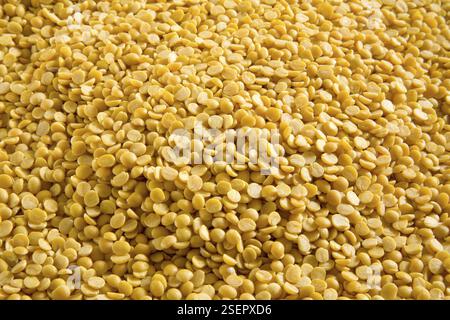
Unlike whole green or brown lentils that maintain their shape, yellow lentils break down into a soft, buttery consistency. The exposed interior absorbs flavors intensely while releasing starches that create natural creaminess without any dairy. Indian cooks have understood this for thousands of years, which is why yellow lentils form the foundation of countless dal recipes across the subcontinent. Lentils (Lens culinaris) are small, lens-shaped pulses — part of the legume family — harvested for their edible seeds. Unlike beans or chickpeas, they require no soaking and cook quickly (10–45 minutes depending on variety). They’re naturally gluten-free, low in sodium, and calorie-conscious (≈230 kcal per cooked ½ cup)2.
What Are The Health Benefits Of Yellow Lentils?
Preparing lentils for salads is a straightforward process that can transform your meals. From soaking and cooking to seasoning and integrating into dishes, each step is essential for achieving the best flavor and texture. By experimenting with different types of lentils, seasonings, and salad combinations, you can create endless nutritious and delicious options. Whether for a quick lunch or a dinner party, lentils make an excellent addition to any salad. Compared to other types of fatty or processed meats, they are also very low in both fat and sodium, other key factors that make up a heart-healthy diet.
Highly nutritious
This nutrient profile directly supports cardiovascular health (via folate and B6) and weight management through sustained satiety. Crucially, yellow lentils contain zero saturated fat—unlike animal proteins—making them ideal for heart-healthy diets per USDA FoodData Central. You can opt for a traditional approach such as a comforting dal, where lentils are simmered with fragrant spices like turmeric and cumin seeds, often enhanced with a tadka – a spicy oil mixture. To incorporate these lentils into a creamy dish, cooking them in coconut milk and vegetable stock can be an excellent way.
Health Benefits of Phytosterols in Lentils
The low cost and high nutritional value of lentils have made them a staple in many cuisines around the world, particularly in Indian and Middle Eastern cooking. One cup of cooked lentils has about 18 grams of protein, which is around the same amount found in most other legumes. Protein is an essential macronutrient that your body needs to build and maintain muscle mass, as well as carry out various physiological functions properly. Additionally, it may be useful for making you feel full and satisfied after a meal, which can be especially beneficial for maintaining a healthy weight (8). The health benefits of lentils may include improved digestion, a healthy heart, diabetes control, weight loss, prevention of anemia, and better electrolytic activity due to potassium. They may aid in the prevention of atherosclerosis and in maintaining a healthy nervous system.
Each variety of lentil offers a unique set of benefits, making them a valuable addition to any diet. Plant sterols/stanols, also known as phytosterols (PS), are sterols of plant origin, and are important constituents of plant cell membranes, with established health benefits [56]. Their structure is similar to cholesterol, with a typicalcyclopentane-perhydrophe- nanthrene ring system, an -OH group at position 3 and a side chain at position 17 (Figure 3) [57]. Phenolic compounds reported in different types of lentils and their quantities. Phenolic acids are compounds containing a phenolic ring attached to at least one carboxylic acid group. They differ in the number and position of the hydroxyl groups on the aromatic ring.
Can Help You Lose Weight
After lentil extract fermentation, 4 μg/mL of sapogenin was found in the form of soyasapogenol B. Lentil extracts showed antimicrobial effect, mainly on lactic acid bacteria and Lactobacillus spp. They concluded that saponins in lentil extracts can be transformed into sapogenins by human gut microbiota, with a modulatory effect on the growth of selected intestinal bacteria [105]. The oxidation mechanism involves an attack on lipids by oxygen radicals which can remove doubly allyl hydrogen from polyunsaturated lipids and promote lipid peroxidation. Saponins are considered as a natural antioxidant, since they can bind cholesterol and prevents its oxidation in the colon [38]. Some of them can capture free radicals, while some others can activate antioxidant enzymes to inhibit the formation of complexes between free radicals and metallic ions.

Legume of the month: Lentils
Lentils can be incorporated into a meal plan in a variety of ways to support overall health and well-being. They can be used in soups, stews, curries, and salads, or as a side dish on their own. Lentils can also be used to make veggie burgers, meatballs, and other meat substitutes that are high in protein and fiber. Additionally, lentils can be added to breakfast dishes, such as omelets and breakfast burritos, or used as a topping for whole grain cereals and yogurts.
Once cooked, drain any excess liquid and let them cool before adding to your salad. This simple, quick, and easy one-pan meal is ready in only 30 minutes and a great weeknight healthy meal solution. Lentils grow on bushy annual plants that produce edible, lens-shaped seeds within pods. Lentils are technically a type of biconvex seed since they grow in pods. Lentils have been a staple of Middle Eastern and Indian cuisine for thousands of years.
About the Author
